Showing posts with label Northumberland. Show all posts

Saturday, 25 April 2026

The grand tour

 A bit like Victorian nobility jaunting round Europe, Tanya and I jaunted round Northern England. Not a lot of bird pictures, some scenic shots but lots of year ticks. 

We will just go chronologically starting with a red kite along the A69 near Castle Douglas. Northumberland was very family orientated but I was still following the local WhatsApp group and the spotted redshank was still at Bothal Pond. Nice little spot which also added two early swallows (April 4th). Following family stuff we had an afternoon at Washington WWT. I have not been there for a long time so it was basically a new adventure and we did the circuit of the wild bit away from the captive birds. Spring was in the air and Merlin was greatly in use as there was a lot of birdsong. We saw over 40 species including multiple chiffchaffs, 3 goosander, a self found spotted redshank, singing blackcaps, 5 stock doves at the feeders, 12 avocet on the wader lake and a nice comma butterfly. 

Cowslips were rampant at Brockholes LWT reserve
Comma
Visits to Hadrian's Wall and Alnwick Castle were basically bird free apart from a falconry display at Alnwick where Harris hawks and a Lanner falcon were the main attraction. I am ambivalent about captive birds of prey but the Lanner falcon could seriously shift!
Wall at Housesteads

Inner Bailey at Alnwick
The next stop was south to Bawtry to catch up with friends and we had a morning in the Idle Valley Country Park. I had not been there since 2019 but it was a warm sunny morning, birdsong was rampant and we listed 35 species including 5 cattle egrets, multiple chiffchaffs and blackcaps, first willow warblers of the year, a singing whitethroat which popped up nicely for a view  and a singing garden warbler which I actually picked up myself from the song, saw briefly and had  confirmed by Merlin. Oh happy day! Then on to Bolton via a birdless M62 and finally heard the local tawny owl from the bedroom window. Next day we had a frustrating walk with the dog as we heard three calling nuthatches but failed to get a good view of any of them. I next spent over an hour at the Elton Reservoir feeders with a brief walk between showers. This gave all the usual suspects at the feeders  including parakeets plus 2 jays hanging on to the suet feeder AND a heard and seen nuthatch. I have never seen jays at any feeders before and their feeding method seemed to be to hammer the suet as much as possible before they fell off and hopefully knock some suet to the ground for eating. A second visit to Elton for an evening walk gave sand martins, swallow and a nice reed bunting but not the hoped for swifts seen there earlier in the day. That was that, as family duties meant there were no more bird trips and no more year firsts.

Now guaranteed at Elton

Lurking jay

Awful photo on the phone through the windscreen but it is a jay trying to eat suet!

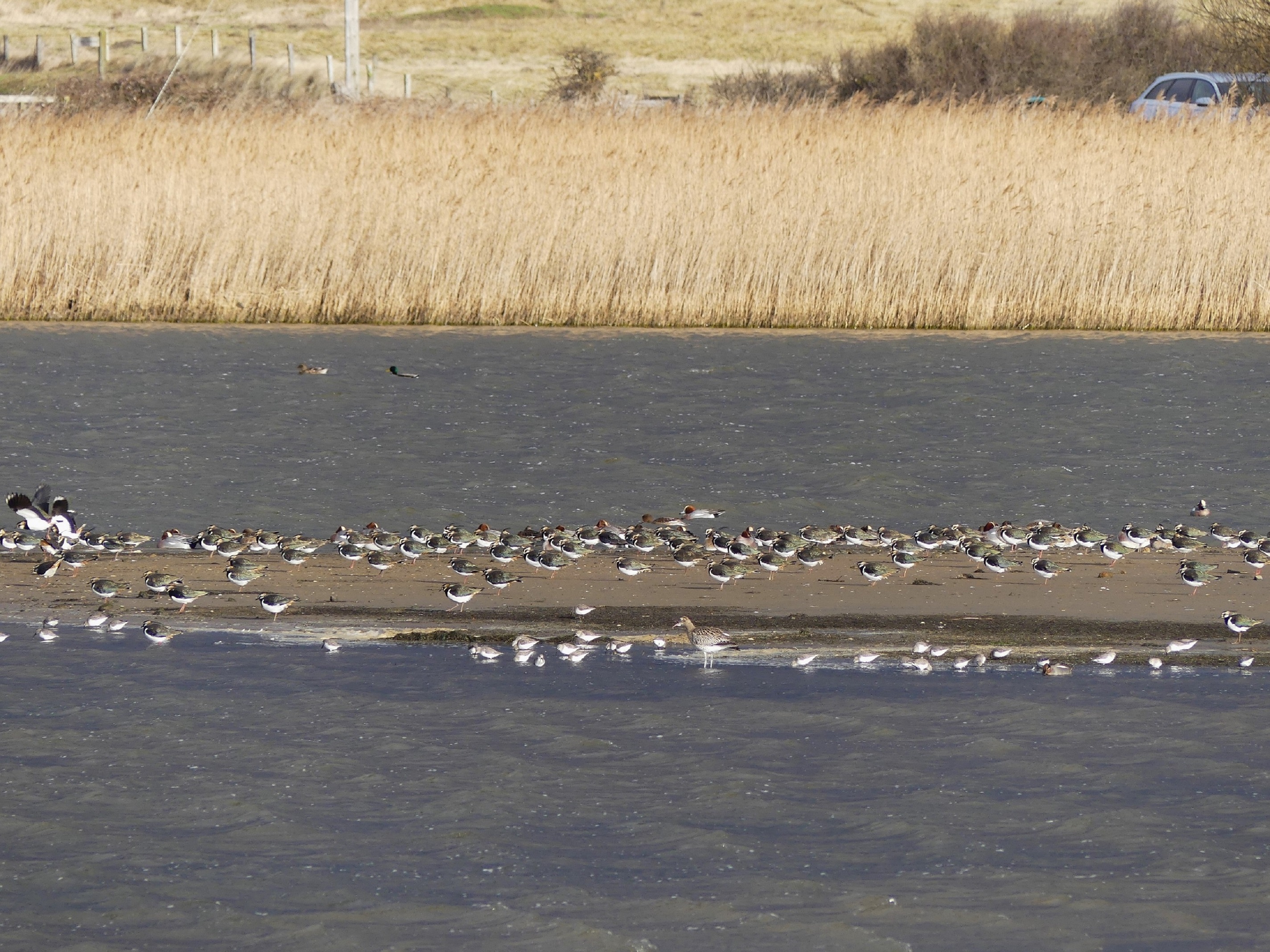
Back home  and a morning at WOW added wheatear, common sandpiper, willow warbler and blackcap to the lists. There were also at least ten Mediterranean gulls around and a recent count produced around 400 black-headed gulls and 30+ lesser black backs who are already predating mallard chicks. Surprisingly we found all of our seven wintering ducks including a couple of teal, but it is getting to the stage of finding something that is not a BHG. Finally a swallow over Bangor and a church walk round Ballymacormick Point added a singing sedge warbler in the gorse and a couple of house martins over Groomsport. 

Moorhen

Black-headed gull

Passing shoveler

Spot the Med gull

Spot the kestrel in Lancashire

Ballymacormick Point - somewhere in there was a sedge warbler.

2026 

124: Dipper
125: Red kite
126: Spotted redshank
127: Swallow
128: Avocet
129: Garden warbler
130: Whitethroat
131: Willow warbler
132: Cattle egret
133: Tawny owl
134: Nuthatch
135: Common sandpiper
136: Wheatear
137: Sedge warbler
138: House martin

NDCP patch
55: Lesser black-backed gull
56: Swallow

Belfast RSPB patch
66: Dunnock 
67: Willow warbler
68: Blackcap
69: Common sandpiper
70: Wheatear


Monday, 23 February 2026

Northumberland birdathon


Trip birds in bold, year birds in green.  Photo credit to David Miller if it says (DM)

First light at Linton Lane

A clear frosty start with the temperature at -2 C and ice on ungritted roads as we headed for Linton Lane to watch the sunrise. As we got out of the car we had robin, blue tit, song thrush, great tit and chaffinch all singing and three pheasants clattered out of the tree above our head with their raucous calls giving us a bit of a shock. The lake itself had teal, moorhen, wigeon, mallard, shoveler, mute swan, gadwall, tufted duck,  goldeneye, grey heron, coot, moorhen, little grebe, oystercatcher  and Canada geese. As the light improved carrion crow, blackbird and woodpigeon started moving and common and black-headed gull dropped in. Unusually for Linton we did not see any owls or raptors. We gave it an hour and then moved on to Queen Elizabeth 2 Country Park. 

QE2 Country Park (DM)

Herring gull joined the list along with cormorant, rook and three tree sparrows on a feeder. The lake itself  contained mallard, coot and goldeneye but did not add any new birds. On to Woodhorn Flash and a female kestrel en route plus magpie before and emergency stop and a U turn as David spotted three grey partridge I had missed. 

Grey partridge (DM)
Grey partridge (DM)

We drove on round to Snab Point where the tide was coming in. This little car park gives beach, rocky coast and a good view out to sea so is well worth a stop. In no particular order we added eider duck, red-throated diver and a raft of 20+ guillemot drifting north on the sea. A nice bonus was up to five fulmar coming in to their nesting sites below the cliff. The shore added ringed plover, redshank, sanderling, purple sandpiper, turnstone and curlew while the gorse behind us had a pair of stonechat and a flock of 25 linnets. A brief stop at Cresswell village gave us starling, jackdaw and house sparrow plus an awful lot of curlew and dunlin out on the rocks. 

Snab Point looking north (DM)

Snab Point seawatching point (DM)

So to Cresswell Pond where we had been given a heads up about pink-footed geese in a field behind the Drift Cafe which contained some Russian white-fronted geese. We were happy to find two, and David also noticed a barn owl in a hedge which I managed to miss! Hard to find something different when looking through around 1000 pinkies  for 10 white fronts which were then spooked by a micro-lite. That's my excuse anyway.

Large pinkfeet flock (DM)

Barn owl in the hedge!! (DM)

Magnificent!! (DM)

There was also a buzzard sitting in a nearer hedge. The pond itself was very quiet (for Cresswell) Again in no particular order we saw mallard, wigeon, teal, gadwall, goldeneye, little grebe, curlew, lapwing, one bar-tailed godwit, three little egrets and some cormorants. Everything was lifted by a female sparrowhawk at one stage. The hedgerow turned up a tree sparrow and little else as there were no feeders around or they were empty. 

Cresswell Pond with the snow covered Cheviot Hills in the distance
                                                                                 (DM)

We moved north to Bell's Farm and picked up skylark in the cattle fields as well as a large flock of pinkfeet and at least 150 white -fronted geese. The camera revealed a couple of barnacle geese which I again managed to miss. 

Pinkies and white fronts at Bell's Farm (DM)

Close ups
(DM)

(DM)

Then on to a very wet Druridge Pools with more water than we have ever seen. I was there in August when it was bone dry.

Druridge Pools in August 2025

Golden plover and lapwing and a lot of water

There were an awful lot of ducks and waders in view from the hide and we added snipe, pintail, shelduck, golden plover and three ruff. This is the first time we have ever seen ruff in February in Northumberland. The icing on the cake here was a splendid marsh harrier which came over and lifted everything. We gave the other hides a miss as the path was flooded and parked up to walk to East Chevington. Again in no particular order we had grey partridge again, a flock of 100+ twite, stonechat, lapwing, red-breasted merganser and great crested grebe off the coast. We reached a nice new hide in the SE corner of the reserve  where a group of birders were looking at a kingfisher perched up and giving good views and we then scoped a distant red-necked grebe, greylag geese and another selection of ducks and waders. The return walk added wren and amazingly a singing cetti's warbler in the reeds. This is the first time I have heard this species in Northumberland but of course we didn't see it! Widdrington Moor Lake added great black-backed gull, reed bunting and lunch at 1530! 

Kingfisher at East Chevington

With time pressing we then headed into Druridge Bay Country Park and connected with two birds we knew were there  - redhead smew and a male scaup as well as pochard. At this stage with the light starting to go we thought we should check the feeders to add a few missing tits and finches but when we reached the turning circle in the car park there were no feeders!! Decision time, so we went to Hauxley to check their feeders and added bullfinch, coal tit and dunnock, but not goldfinch which was still missing from the list! By this time it was past 4.30 so a last hurrah at Hadston Scaurs for the odd wader only added a dead puffin in the sand dunes. Apparently it has been a bad winter for seabirds and dead birds are washing up all along the east coast. We finished with 80 and no goldfinch and I added 15 birds to the 2026 list.  Thanks to the Northumberland WhatsApp group and the many friendly and helpful birders we met along the way. We had a wonderful day and finished off with a shower and out to Puccinis in Cramlington for a celebratory meal. 

2026
93: Slavonian grebe
94: Tree sparrow
95: Grey partridge
96: Fulmar
97: Sanderling
98: Pink-footed goose
99: White-fronted goose
100:Kestrel
101: Skylark
102: Golden plover
103: Ruff
104: Kingfisher
105: Red-necked grebe
106: Cetti's warbler
107: Smew
108: Scaup


Saturday, 9 March 2024

Northumberland birdathon and other bits from England.

 A ten day trip to England always gives a few birding opportunities and this year was no exception. My birding pal David and I have been doing this for more years than we care to remember and have fallen into a predictable pattern starting at a reserve at Linton Lane and heading north until the light fails. 

Linton Lane is a "flash" - a pond of water surrounded by reeds and rough pasture caused by subsidence. It required a bit of an effort to get there as there had been a lot of rain and the approaches were flooded I was using a couple of sticks which were sinking into four inches of mud. However the effort to get there was rewarded as we were quickly seeing birds in the water and around the shores. We started with mute swans, mallard, tufted duck, gadwall, shoveler,  wigeon, pochard, coot, herring gull, black-headed gulls, little grebe, carrion crows, grey heron, wood pigeon and then a gorgeous barn owl which drifted over the hide and flew across the reeds in front of us. This was followed by a buzzard sitting on a distant pylon and a female marsh harrier slowly quartering the far shore and pushing about 200 teal out of the reeds into the water. Back to the car and we added robin, chaffinch, blackbird, song thrush, magpie, pheasant and grey partridge before driving to the Queen Elizabeth II Country Park.


Linton Lane

This is an interesting site with good birds on the water but there is also a mob of ducks and geese in the car park coming to be fed by well meaning locals who roll up with pan loaves, rolls and baguettes. We quickly added greylag geese, Canada goose, moorhen and common gull in the car park, but the most unexpected bird was a single whooper swan in the middle of the bread feeders. The lake gave us  goldeneye, cormorant, great crested grebe and red-throated diver. 

Whooper swan
Onwards past Woodhorn Flash an our first sightings of pink-footed goose and then through Lynemouth to hit the coastal road to Cresswell and Snab Point. The tide was fully in at this point so the flooded fields contained stonechat, redshank, lapwing, curlew and oystercatcher. The high tide meant that small waders were absent but we did pick up great black-backed gull, fulmar, eider duck, shag and common scoter out to sea. 

Our next stop was Cresswell Pond which is another "flash" but as it is only 100 m inland it is good for waders, ducks and all sorts of other goodies. We had a lot of wigeon, lapwing, coot and moorhen, but were amazed to see 17 Mediterranean gulls on the water as well as shelduck, red-breasted merganser, little egret, dunlin, ringed plover  and turnstone. The walk down to the hide is usually good for small stuff but this year there were no feeders so we only saw wren, starling and chaffinch.  

Cresswell Pond

Mediterranean gulls

The next leg to Druridge has a dune system on one side and farmland on the other side. There is usually a finch flock around the feeding areas for the cattle so we picked up on goldfinch, linnet, 3 grey partridge, pied wagtail, rook, jackdaw, magpie and a single skylark. A local birder asked us had we come to see the hooded crow. We laughed and said no, not really, we get them in the garden. Two minutes later the hooded crow did a flypast and got added to our list as well as being added to my Northumberland list. He also advised us that Druridge Pools were inaccessible without wellies, so after a cursory look and a nice female kestrel we headed for Widdrington where we saw 14 red-legged partridge and a nice wee house sparrow flock. 

East Chevington

We continued north to East Chevington and the new hides but the lake only held wigeon, tufted duck, mute swans, greylag geese, cormorants. lapwings and goldeneye, nothing to quicken the pulse so it was on to Druridge Bay Country Park, lunch and the feeders. It took us a while to find them as they have been moved but once we got our eye in we added quite a number of passerines to the list -  coal tit, blue tit, great tit, long-tailed tit, tree sparrow, dunnock, bullfinch and eventually a willow tit. Next stop was Hadston Scarrs and then into Hauxley Nature reserve and another feeding station which added reed bunting, siskin and greenfinch to the list. By this time the light was dropping, cloud was piling in and rain had set in so we had a quick look at  the beach south of  Amble,  the Amble estuary, (golden plover) and sped back to the QE II CP for a last look for the redhead smew which we had missed earlier - unfortunately we missed it again. 

Coquet Island from Low Hauxley


Feeders at Druridge Bay but no woodpecker.

Reed bunting (F)

My lack of mobility meant that sanderling didn't make the list and we somehow managed to miss collared dove, but we ended up with 75 species including 9 additions to the 2024 list. All in all a cracking day, beautiful scenery, friendly locals stunning birds and it was all we hoped it would be. 


The scenic route to Bolton added black grouse at Langdon Beck and Richard's garden turned up a nuthatch on the feeders and a calling tawny owl in the nearby woodland. Pennington Flash was a bit disappointing as the main feeding station was flooded and the smaller one was overrun with grey squirrels. It did however have at least a dozen reed buntings - the most I have seen anywhere for a long time. 
Pennington Flash, view from Pengy's hide

Reed buntings

Reed bunting

2024:
106: Pochard
107: Barn owl
108: Marsh harrier
109: Grey partridge
110: Mediterranean gull
111: Skylark
112: Red-legged partridge
113: Willow tit
114: Reed bunting
115: Black grouse
116: Tawny owl
117: Nuthatch

WOW
59: Eider duck, managed to miss this last time out!

NDCP
43: Goldcrest

Sunday, 26 February 2023

A trip to England

Essential child care gave the opportunity for a long weekend in Northumberland and our now traditional dawn to dusk birdathon. Then on via the scenic route to Bolton and we were able to squeeze a bit of birding in between playgrounds, Burger king and Minecraft.

Red kites over the road at Gatehouse of Fleet was a good start on the way across. A trip to St Mary's Island at high tide gave purple sandpiper, grey plover and sanderling. Saturday dawned bright and sunny but the forecast rain and cloud arrived around 11.00 and made for a damp cold finish to the day. With my pal David - he of the good camera and the rustic bunting in his garden - we followed our traditional route starting at Linton Lane and going via QE2 Country Park to Woodhorn, Lynemouth, Snab Point, Cresswell and Cresswell Pond. Linton Lane had two marsh harriers and very good views of grey partridge sitting under a hedge. We usually see them disappearing quickly into cover. The highlight at Cresswell  was an early avocet. Apparently they usually arrive late March. We have never seen one on our February visits before.  We also had a good selection of ducks and waders including 2 ruff and 6 snipe out in the open as well as large flocks of pink-footed geese.  We then went via Widdrington (red-legged partridge) to the Druridge Bay Country Park for lunch (and bird feeders) before checking the sea for red-throated divers and common scoter. Then north to Hadston Scarrs, Hauxley and Amble. We spent 15/20 minutes ambling round Amble harbour as we realised we had not yet seen a pied wagtail. In rain and gathering gloom we gave up, walked back to the car and there was a pied wagtail on the footpath beside the car!! Other highlights included at least 6 albino pheasants, in fact there were pheasants everywhere. We reckoned they must have all been newly released. I also added a kestrel to the year list - it is at least 6 months since I saw one at home as well as Canada goose which always needs a trip to England. We ended up with 70 species which is what we hope for before we set out. Bearing in mind the deteriorating weather we were happy enough. All in all a good day with cracking views, good birds and good company. 

The attached photographs are mainly David's, I have noted the ones I took in case it isn't patently obvious. I ended up phone scoping the waxwing as I omitted to lift the camera - apologies for the dodgy shots. 

St Mary's Island (Derek)

Pink-footed geese

Cresswell Pond

Mixed waders


Avocet

Snipe

Lapwing (Derek)

Derek's snipe!

Derek's avocet, dunlin & curlew

Grey partridge

Long-tailed tit

The scenic route to Bolton goes via Langdon Beck and a black grouse lekking area so it became 115 for the year. Bolton added nuthatch on the feeder, tawny owl calling around the house and a single waxwing 5 minutes from the house. Known locally as the Bolton one (or Bolton Wanderer) it has been around for about 10 days and has two berried trees all to itself in a housing estate so it might be around for a while. I took the grand-children to see it and they were mildly impressed by its cool Mohican.

The new dormer gives a good view of the garden and the feeders. I have tried several times to put a wee arrow to show where the feeders are but Blogger has defeated me. If any readers know how to do this please let me know.  The feeders are hanging above the wee green bush just to the left of the poplar tree at the end of the fence. The nuthatch uses the tree to approach the feeders and I have seen woodpecker, jay and treecreeper on the tree as well. This time I managed a few shots of birds at the feeder. The tawnies call from the wood behind, heard but never seen. 

Overview

Collared dove at the niger feeder

Magpie

A very fast nuthatch flying right!!

Great tit

A few Bolton wanderer shots to close and then it is back to WOW and the coastal path for 6 weeks.


2023
102: Wren - should have been added on January 17th!
103: Red kite
104: Grey plover
105: Sanderling
106: Pink-footed goose
107: Canada goose
108: Marsh harrier
109: Kestrel
110: Red-legged partridge
111: Grey partridge
112: Pheasant
113: Avocet
114: Ruff
115: Black grouse
116: Waxwing
117: Tawny owl
118: Nuthatch

NDCP
53: Grey heron

WOW
64: Cormorant